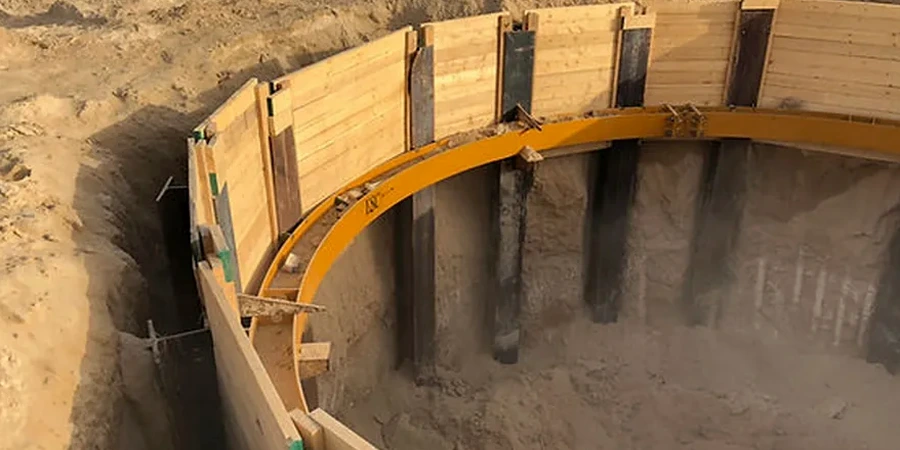
Foundation engineering in Fremont, California, encompasses the critical geotechnical and structural design services required to safely transfer building loads to the underlying ground. This category covers everything from initial subsurface investigation and soil characterization to the detailed design of shallow and deep foundation systems. In a seismically active region like the San Francisco Bay Area, proper foundation design is not just a matter of structural integrity—it is an essential life-safety consideration. Services such as settlement analysis and bearing capacity analysis form the backbone of any successful project, ensuring that structures perform reliably over their design life without excessive deformation or catastrophic failure.
Fremont's geology presents unique challenges that directly influence foundation selection and performance. The city straddles the boundary between the flat alluvial plains of the Santa Clara Valley and the uplifted foothills of the Diablo Range. Much of the urbanized area is underlain by Quaternary alluvial deposits consisting of interbedded clays, silts, sands, and gravels, which can be highly variable in density and consistency. These soils are susceptible to liquefaction during strong ground shaking, a phenomenon that must be explicitly evaluated per current code requirements. Additionally, the proximity to the Hayward Fault, one of the most active fault systems in the United States, necessitates rigorous geotechnical investigation to characterize site-specific seismic hazards.
All foundation design work in Fremont must comply with the California Building Code (CBC), which adopts and amends the International Building Code (IBC) for statewide application. The CBC incorporates ASCE 7 for load determination and seismic design parameters, while referencing the ACI 318 for structural concrete and the AISC 360 for structural steel. Chapter 18 of the CBC specifically governs soils and foundations, requiring site-specific geotechnical reports for most structures. These reports must address bearing capacity, settlement, lateral earth pressures, and seismic considerations including liquefaction potential. For deep foundations, the CBC mandates adherence to the analysis and design provisions of IBC Section 1810, which covers driven piles, drilled shafts, and other deep foundation elements.
The types of projects requiring comprehensive foundation engineering in Fremont range from single-family residential additions to large-scale commercial and infrastructure developments. Multistory office buildings and mixed-use structures in the Warm Springs innovation district often demand pile foundation design to bypass weak near-surface soils and achieve adequate support. Industrial facilities with heavy equipment loads require meticulous assessment of both static and dynamic loading conditions. Even residential projects on hillside lots in the Mission San Jose area frequently involve grade beam and pier systems that must be designed for both gravity and lateral loads. For projects where cost efficiency is paramount, a detailed pile skin friction vs. end bearing analysis can optimize pile lengths and diameters, potentially reducing construction costs while maintaining performance. Transportation infrastructure, including bridge abutments and retaining walls along I-880 and I-680 corridors, relies on driven pile design for rapid installation and reliable capacity in dense urban environments.
The decision hinges on the strength and compressibility of near-surface soils, the magnitude of structural loads, and tolerance for settlement. If competent bearing strata are within a few meters of the surface and settlement analysis indicates acceptable performance, shallow footings are typically sufficient. When weak fills, soft clays, or liquefiable sands are present, or when loads are very high, deep foundations such as piles or drilled shafts are required to transfer loads to more competent materials at depth.
The CBC requires site-specific seismic hazard analysis including evaluation of ground motion parameters, fault rupture potential, and liquefaction susceptibility. Foundations must be designed to resist lateral forces from seismic events and accommodate the resulting displacements. The code mandates that geotechnical reports provide seismic design parameters such as site class, spectral accelerations, and bearing capacity reduction factors under seismic loading conditions.
A typical investigation begins with a desktop review of geologic maps and historical records, followed by subsurface exploration using drilling, cone penetration testing (CPT), or test pits. Soil and groundwater samples are collected for laboratory testing to determine strength, compressibility, and chemical properties. The engineer then performs analyses for bearing capacity, settlement, and lateral response, culminating in a geotechnical report with foundation recommendations.
A foundation may have sufficient safety margin against shear failure yet still undergo excessive settlement that damages architectural finishes, causes doors to bind, or creates drainage problems. Differential settlement between adjacent footings can be particularly damaging. Settlement analysis predicts both total and differential movements over time, allowing engineers to proportion foundations so that movements remain within tolerable limits for the specific structure.