Geotechnical investigation in Fremont, California, encompasses the systematic evaluation of subsurface soil, rock, and groundwater conditions to inform safe and economical design of foundations, retaining structures, pavements, and earthworks. Because Fremont sits near the tectonically active boundary of the San Francisco Bay Area, these investigations are not merely a best practice—they are an essential risk-management tool. A thorough site investigation identifies potential hazards such as liquefiable sands, expansive clays, undocumented fill, and shallow groundwater that can compromise structural integrity over time.
Fremont’s geology is shaped by its position on the eastern edge of the Santa Clara Valley, where alluvial fan deposits from the Diablo Range transition into Bay Mud and estuarine sediments near the shoreline. Much of the flatland development rests on Quaternary alluvium with lenses of soft, compressible clay and loose granular soils. The presence of the Hayward Fault, which runs along the base of the East Bay hills, introduces a significant seismic factor. Liquefaction susceptibility is mapped extensively across the city, particularly in areas underlain by Holocene alluvial deposits with high groundwater tables. Consequently, nearly every commercial and residential project of scale requires subsurface data to comply with mandatory seismic design parameters.
Local practice follows the California Building Code (CBC), which adopts and amends the International Building Code, and mandates geotechnical reports for most structures. The City of Fremont enforces the CBC through its Building & Safety Division and requires site-specific studies addressing bearing capacity, lateral earth pressures, and seismic hazard mitigation per ASCE 7 and the CBC’s Chapter 18. For projects within Alameda County, additional review by the Alameda County Public Works Agency may apply, particularly for grading, drainage, and erosion control. These regulations ensure that investigation methods, such as the Standard Penetration Test (SPT), meet consistent sampling and reporting standards.
The types of projects that routinely trigger a formal investigation range from single-family homes on hillside lots to mid-rise mixed-use buildings in Fremont’s downtown innovation district. Infrastructure work—including bridge replacements, school expansions, and flood-control improvements—demands equally rigorous subsurface characterization. Developers of solar farms, parking structures, and warehouse logistics centers in the Warm Springs and Ardenwood areas also rely on geotechnical data to optimize foundation systems and manage dewatering requirements. In each case, the investigation scope is tailored to the structure’s risk category and the mapped geologic hazards at the site.
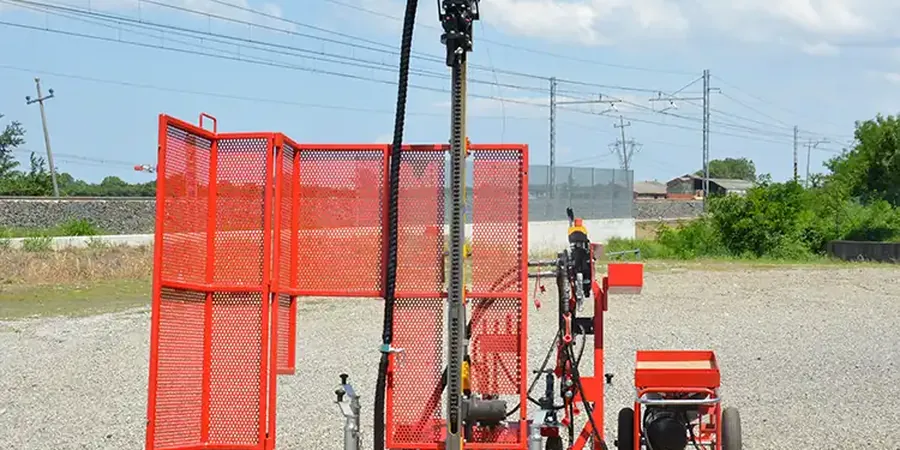
A typical investigation begins with a desktop review of geologic maps and prior reports, followed by field exploration using drill rigs, test pits, or cone penetrometer equipment. Soil and rock samples are logged in the field and sent to a laboratory for index, strength, and consolidation testing. The final report interprets the data to provide foundation recommendations, seismic design parameters, and construction considerations specific to Fremont's alluvial and Bay Mud deposits.
The City of Fremont requires a geotechnical report for most new structures, significant additions, and projects on slopes or in mapped liquefaction or landslide hazard zones. Even smaller residential projects may need an investigation if the site contains fill, soft clay, or high groundwater. The Building & Safety Division reviews each application and will issue a correction notice if a soils report is missing.
Because a portion of Fremont lies within an Alquist-Priolo Earthquake Fault Zone, any structure intended for human occupancy must demonstrate through trenching or geophysical surveys that no active fault trace crosses the building footprint. Beyond fault rupture, the investigation must characterize site class, potential for liquefaction, and dynamic soil properties to comply with CBC seismic design provisions, which directly influence foundation type and structural detailing.
Investigations must be conducted under the responsible charge of a California-licensed Civil Engineer or Geotechnical Engineer. The firm performing the work should carry professional liability insurance and be familiar with local agencies including the City of Fremont and Alameda County Public Works. The final report must bear the seal and signature of the licensed professional, certifying that the work meets state and local standards of practice.