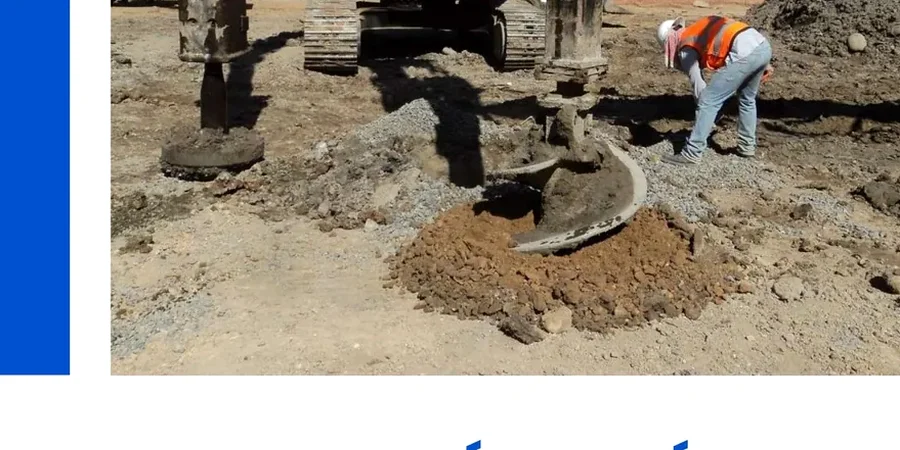
Ground improvement is a critical branch of geotechnical engineering that encompasses a suite of techniques designed to modify the physical and mechanical properties of soil and rock to support construction demands. In Fremont, California, where urban expansion often encounters challenging subsurface conditions—including soft bay muds, compressible clays, and loose alluvial deposits from the nearby Alameda Creek watershed—improvement methods are not merely optional enhancements but essential prerequisites for safe, durable infrastructure. This category addresses the full lifecycle of soil treatment, from initial site characterization and design through execution and long-term performance verification, ensuring that structures ranging from single-family homes to large-scale commercial complexes remain stable against settlement, liquefaction, and lateral spreading. Given Fremont's position within the seismically active San Francisco Bay Area, the stakes are especially high, and the integration of advanced techniques like deep soil mixing and preloading with surcharge design has become standard practice for mitigating risks on marginal sites.
The local geology of Fremont presents a complex mosaic that directly dictates the choice and design of ground improvement strategies. Much of the city's flatlands, particularly west of Interstate 880, rest on Holocene-age alluvium and estuarine deposits characterized by layers of soft, normally consolidated clays and silts interbedded with loose sands. These soils are notorious for low bearing capacity, high compressibility, and a significant potential for strength loss during seismic shaking. In contrast, areas transitioning toward the East Bay hills expose Pleistocene alluvial fans and older, stiffer formations that generally provide better native support. However, even these zones can contain undocumented fills or colluvial pockets requiring intervention. Projects involving landfill geotechnics often contend with anthropogenic deposits that exhibit erratic composition and settlement behavior, demanding rigorous investigation and tailored improvement solutions to transform these compromised terrains into buildable land.
Regulatory compliance in Fremont is governed by a stringent framework of nationally recognized codes and local amendments, primarily rooted in the California Building Code (CBC), which adopts and modifies the International Building Code (IBC). Chapter 18 of the CBC directly addresses soils and foundations, mandating thorough geotechnical investigations and specifying performance criteria for bearing capacity and allowable settlement. Crucially, for seismic design, the American Society of Civil Engineers' ASCE 7 standard, as referenced by the CBC, defines site-specific ground motion parameters that must account for site class effects—often requiring improvement to shift a Site Class E or F profile to a more favorable class. The design and execution of deep soil mixing, preloading, and other methods must also adhere to consensus guidelines from organizations like the Deep Foundations Institute (DFI) and the Federal Highway Administration (FHWA), ensuring that quality control measures such as in-situ testing and instrumentation monitoring meet rigorous public safety standards.
The types of projects in Fremont that demand ground improvement are diverse and reflect the city's ongoing development pattern. Mid-rise residential and mixed-use buildings in the Warm Springs Innovation District frequently require preloading with prefabricated vertical drains to accelerate consolidation and limit post-construction settlement on compressible clays. Large-footprint warehouse and logistics centers near the Tesla factory and BART station often employ deep soil mixing to create stiffened soil-cement grids or blocks that reduce liquefaction risk and improve bearing capacity for heavy floor loads. Municipal infrastructure, including levee upgrades for flood control along the bayfront and the closure or redevelopment of former landfills, relies heavily on specialized landfill geotechnics to manage differential settlement and gas migration while creating stable platforms for parks or solar arrays. Even transportation projects, such as bridge approach embankments and roadway widenings, integrate preloading with surcharge design to mitigate the notorious bump at the end of the bridge caused by soft foundation soils.
Ground improvement encompasses techniques that modify soil properties to increase bearing capacity, reduce settlement, and mitigate seismic hazards. In Fremont, it is essential due to prevalent soft bay muds and loose alluvial soils that are susceptible to liquefaction and excessive compression under load, posing safety and serviceability risks for structures.
Fremont's subsurface varies from soft, compressible clays in the flatlands to stiffer alluvial fans near the hills. Soft clays often require preloading to accelerate settlement, while loose sandy zones prone to liquefaction may need deep soil mixing. The specific stratigraphy and groundwater level directly determine the most effective and economical method.
Ground improvement in Fremont is regulated by the California Building Code (CBC), which adopts the IBC with state-specific amendments. Chapter 18 governs soils and foundations, while seismic design must comply with ASCE 7 standards. These codes require geotechnical investigations and performance-based verification of the improved ground.
Projects on Fremont's compressible or liquefiable soils frequently require improvement. This includes mid-rise buildings in the Warm Springs district, heavy warehouse facilities, bridge approaches, levee upgrades, and the redevelopment of former landfills. Any structure where settlement or seismic instability could compromise safety or function is a candidate.