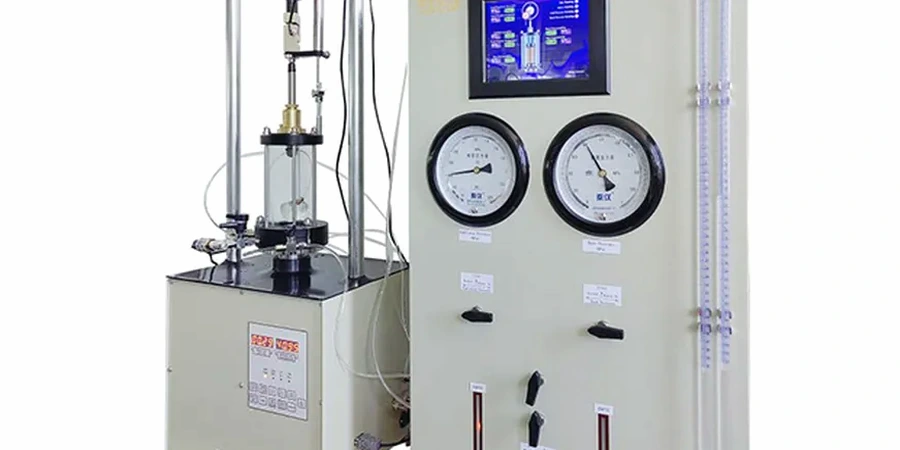
Geotechnical laboratory testing in Fremont forms the backbone of safe and economical construction across California's East Bay region. This category encompasses a suite of standardized physical and mechanical tests performed on soil and rock samples to determine their engineering properties. From simple index tests to advanced strength evaluations, laboratory analysis provides the quantitative data engineers need to design foundations, retaining structures, pavements, and earthworks. In Fremont, where rapid urban expansion meets complex alluvial and hillside geology, accurate lab results are not just helpful—they are essential for complying with local building codes and mitigating risks associated with seismic activity and variable soil conditions.
Fremont's geological setting is characterized by deposits of the Alameda Creek alluvial plain, intermixed with Franciscan Complex bedrock in the eastern foothills. These formations produce highly heterogeneous soils: layers of expansive clay, loose silts, and sands that can liquefy under earthquake shaking. The Hayward Fault runs along the city's western edge, making seismic considerations paramount. A thorough soil classification per USCS and AASHTO standards is the critical first step in understanding how these local materials will behave under load and during a seismic event. Without proper classification, engineers cannot reliably predict settlement, bearing capacity, or slope stability.
Local and national standards govern laboratory procedures in Fremont. The California Building Code (CBC), based on the International Building Code, mandates geotechnical investigations for most structures. ASTM International standards define the test methods: ASTM D422 for particle-size analysis, ASTM D4318 for Atterberg limits, ASTM D1883 for CBR, and ASTM D2850 and D4767 for triaxial compression. Caltrans specifications, particularly for public works and transportation projects, often require laboratory CBR testing for pavement design and grain size analysis using both sieve and hydrometer methods to fully characterize fine-grained soils. Adherence to these protocols ensures that data is reproducible, legally defensible, and accepted by regulatory agencies.
The types of projects in Fremont that depend on this laboratory category are diverse. High-density residential subdivisions in the Warm Springs area require settlement and expansion analyses. Commercial developments along the Mowry Avenue corridor need precise bearing capacity values. Infrastructure projects, including BART extensions and levee improvements along the bay, demand rigorous triaxial shear strength testing to evaluate stability under rapid drawdown or seismic loading. Even smaller-scale retaining walls and slope repairs in the Niles hills rely on a comprehensive soil mechanics study to prevent failures. In every case, laboratory data directly informs design parameters, reducing material costs and preventing over-engineering while ensuring public safety.
Field testing assesses soil properties in situ, providing immediate but often less controlled data on density or penetration resistance. Laboratory testing, performed on carefully retrieved samples, offers precise, repeatable measurements of classification, strength, compressibility, and hydraulic conductivity under controlled conditions. Both complement each other, but laboratory tests are essential for detailed design parameters and constitutive modeling required by the California Building Code.
Core ASTM standards include D422 for particle-size analysis, D4318 for Atterberg limits, D1883 for CBR, and D2850/D4767 for unconsolidated-undrained and consolidated-undrained triaxial tests. Additional standards like D2435 for consolidation and D3080 for direct shear are frequently specified. These are referenced by the CBC and Caltrans, ensuring consistency across projects in the region.
Fremont's proximity to the Hayward Fault and liquefiable alluvial soils necessitates dynamic laboratory testing. Cyclic triaxial or resonant column tests may be required to assess liquefaction potential. At a minimum, standard triaxial tests provide undrained shear strength for seismic slope stability and bearing capacity evaluations. Soil classification and grain size analysis are also critical first steps in screening for liquefaction susceptibility per CBC guidelines.
Laboratories should be accredited to ASTM E329 or ISO/IEC 17025 through programs like AASHTO re:source or the U.S. Army Corps of Engineers. In California, Caltrans maintains an Independent Assurance program for labs working on state-funded projects. Certifications ensure technicians are qualified, equipment is calibrated, and test results are traceable and defensible for regulatory submissions and peer review.