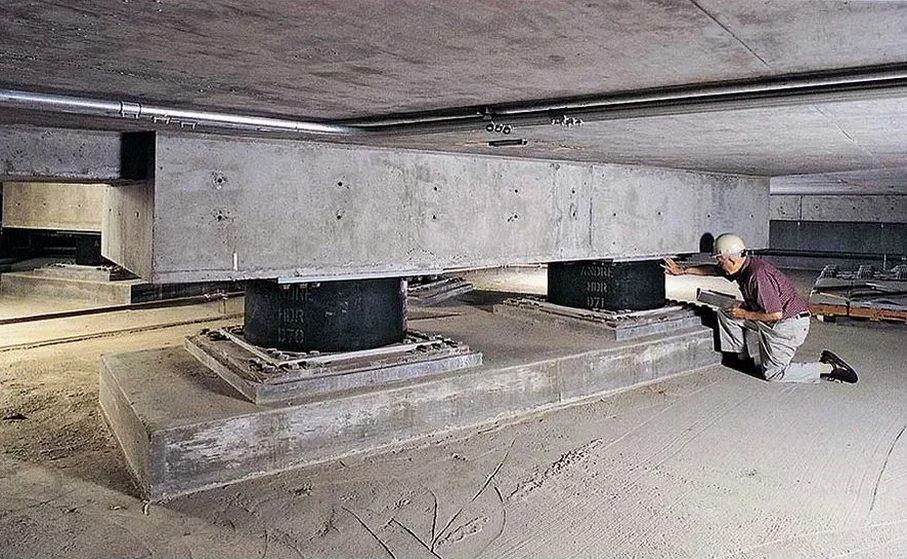
Seismic engineering in Fremont represents a critical discipline that encompasses the analysis, design, and mitigation of earthquake-induced ground motion effects on structures and infrastructure. Located in the seismically active San Francisco Bay Area, Fremont sits astride the Hayward Fault, one of the most hazardous fault lines in the United States, making comprehensive seismic assessment not merely a regulatory requirement but an essential component of public safety and structural resilience. This category of services addresses the full spectrum of earthquake engineering concerns, from characterizing how seismic waves propagate through local soils to implementing advanced protective systems that decouple structures from damaging ground movements. For property owners, developers, and municipal planners, understanding and applying these specialized analyses can mean the difference between catastrophic failure and continued functionality after a major seismic event.
The geological setting of Fremont presents unique challenges that amplify seismic risks beyond what standard building codes typically address. The city spans across alluvial plains, bay mud deposits, and foothill terrains, creating a complex subsurface mosaic where seismic waves can be dramatically amplified or modified. Soft soils prevalent in areas near the Bay margins and along creek beds are particularly susceptible to seismic amplification analysis, where ground motions can be magnified by factors of two to four compared to bedrock reference sites. These amplification effects were starkly demonstrated during the 1989 Loma Prieta earthquake, when deep soil basins in the Bay Area experienced shaking intensities far exceeding predictions based on magnitude alone. Additionally, the potential for liquefaction in saturated sandy soils and the presence of paleochannels beneath developed areas necessitate thorough site response analysis to predict how specific locations will behave under different earthquake scenarios, accounting for the three-dimensional wave propagation effects that one-dimensional code-based methods often miss.
Regulatory compliance in Fremont is governed by a layered framework of national, state, and local standards that mandate rigorous seismic evaluation for many project types. The International Building Code (IBC) as adopted by California forms the baseline, supplemented by the California Building Code (CBC) and ASCE 7 standards that specify site classification procedures and seismic design parameters. Critically, the California Geological Survey's Special Publication 117 provides detailed guidelines for evaluating seismic hazards, while local Fremont ordinances often impose stricter requirements for structures near the Hayward Fault Alquist-Priolo Zone. For essential facilities such as hospitals and emergency response centers, compliance with California's OSHPD or federal guidelines under FEMA P-58 may require performance-based design approaches that go beyond prescriptive code minima. These regulations increasingly recognize the value of advanced techniques like base isolation seismic design in achieving enhanced performance objectives, particularly for critical infrastructure where post-earthquake functionality is paramount.
The types of projects requiring comprehensive seismic services in Fremont span a wide range of scales and occupancies, each presenting distinct performance objectives and risk profiles. High-density residential developments, particularly mid-rise and high-rise structures, demand detailed site-specific hazard analyses to ensure life safety and minimize economic losses. Commercial and industrial facilities housing sensitive equipment or hazardous materials must consider not only structural integrity but also operational continuity, often driving the adoption of advanced protective technologies. Infrastructure projects including bridges, overpasses, and utility networks require specialized seismic vulnerability assessments that account for soil-structure interaction and network resilience. Educational institutions and healthcare facilities represent a particularly demanding category, where societal expectations for post-earthquake functionality necessitate robust design strategies that incorporate both geotechnical and structural innovations. Even retrofit projects on existing buildings, triggered by changes in use or seismic hazard reclassification, require careful evaluation using modern analytical methods to determine cost-effective strengthening approaches.
Standard code site classification uses simplified shear wave velocity averaging to assign a site class, while site response analysis performs detailed numerical modeling of how earthquake waves propagate through specific soil profiles. This captures nonlinear soil behavior, impedance contrasts, and topographic effects that code-based methods approximate, providing site-specific ground motion spectra and time histories essential for critical projects in Fremont's variable geological conditions.
Base isolation is recommended for essential facilities requiring post-earthquake functionality, structures housing sensitive contents, or buildings on soft soil sites where conventional design would require uneconomical strengthening. In Fremont's high seismic hazard environment near the Hayward Fault, isolation can significantly reduce floor accelerations and inter-story drift, protecting both structural and non-structural components while improving life safety.
Fremont's diverse soils range from competent rock in the foothills to deep soft bay mud deposits that can amplify ground motions substantially. Site-specific assessments must evaluate shear wave velocity profiles, potential for liquefaction in saturated sandy layers, and basin edge effects where seismic waves can constructively interfere. These factors directly influence design spectra and may require ground improvement or foundation modifications beyond code minimums.
The Alquist-Priolo Act requires detailed fault rupture hazard investigations for structures within designated zones along the Hayward Fault traversing Fremont. Projects must demonstrate that buildings are set back from active fault traces to avoid surface rupture damage. This involves trenching studies, geomorphic analysis, and coordination with California Geological Survey reviewers, adding regulatory complexity to development near fault zones.